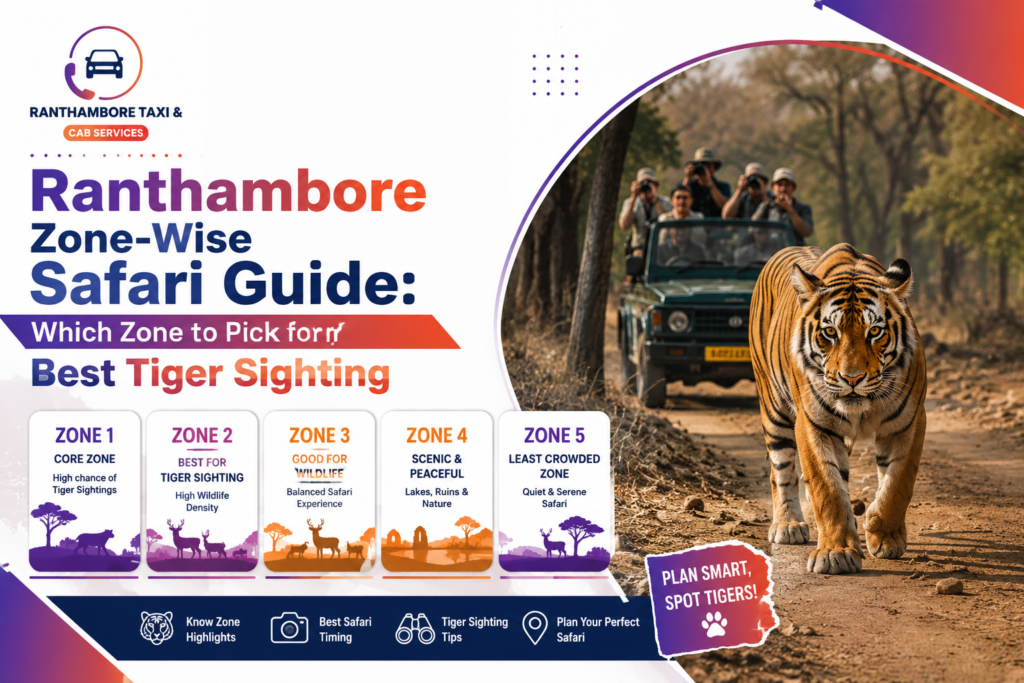
Ask five different guides which Ranthambore safari zone is best for tiger sighting, and you’ll probably get five different answers. Tigers don’t stay put. Territories shift, cubs grow up and move on, and a zone that was buzzing last season can go quiet the next. Still, some zones have a stronger track record than others. Knowing what each one offers helps you set the right expectations before you go.
How Ranthambore’s Safari Zones Work
Ranthambore National Park is split into 10 safari zones. Zones 1 to 5 are the core zones, while Zones 6 to 10 make up the buffer area around them. One thing worth knowing upfront: you can’t simply pick your zone when you book. Allocation runs through the forest department’s system and is largely random, so even a well-planned trip comes with an element of luck. Because of that, the smarter approach is to think in terms of “zones with a strong recent record” rather than chasing one specific number. For the official rules on zone allotment and permits, the Ranthambore National Park website is worth a quick check before you book.
Ranthambore Safari Zones, One by One
Core Zones (1–5)
Zone 1 is entered through Singh Dwar and covers the area around Ranthambore Fort and Padam Talao, so it also doubles as one of the most scenic backdrops in the park. Sightings here are moderate rather than guaranteed. When a tiger does appear near the fort or the lake, though, it makes for a striking shot.
Zone 2 is built around Rajbagh Talao and its old ruins. It’s dotted with waterholes, which makes it one of the more consistent zones for both tiger and leopard sightings. Many guides rank it among the top picks for exactly this reason.
Zone 3 is often called the heart of the park. Dense forest cover and a long history of frequent sightings, particularly of resident tigresses, back that reputation up. If you only get to try one zone, this is usually the one people hope for.
Zone 4 is centred around the Jogi Mahal area and offers a bit more variety, with reasonable chances of spotting tigers alongside sloth bears and other wildlife.
Zone 5, set around Malik Talao, rounds out the core area with steady wildlife activity, even if it sees a little less traffic than Zones 2 and 3.
Buffer Zones (6–10)
Zone 6 (Kundal) is the first of the buffer zones, and increasingly one of the most talked-about. It shares a boundary with Zone 1, so resident tigers move through here too. It’s also known for birdwatching, including sightings of the endangered red-headed vulture.
Zone 7 (Anantpura) has rocky hills and dense forest that give it a rawer, less-curated feel. Sightings are less frequent here, but the terrain itself makes for a memorable drive.
Zone 8 (Rajpura) stays quiet and far less commercial than the core zones. Tiger activity has been picking up here over recent seasons.
Zone 9 (Umri) offers a deep-jungle feel with low visitor numbers. It suits travelers who value a peaceful drive over guaranteed sightings.
Zone 10 (Aantri) is the newest of the buffer zones, with open landscapes that work well for both photography and birdwatching. It’s gained real momentum with tiger sightings in the last couple of seasons.
Best Ranthambore Safari Zones for Tiger Sighting
If sighting odds matter most to you, Zones 2, 3, and 4 have the strongest overall track record among all the Ranthambore safari zones. That said, don’t write off the buffer zones. Zone 6 and Zone 10 in particular have surprised plenty of visitors in recent seasons, and they come with the added bonus of smaller crowds. This matters even more if you’re travelling during monsoon, since core Zones 1 to 5 close entirely between July and September and only the buffer zones stay open. We’ve covered that in more detail in our guide on why monsoon is an underrated time for a Ranthambore road trip.
Tips to Improve Your Chances, Whichever Zone You Get
- Book the morning safari where possible. Tigers are more active in cooler hours, and visibility is sharper in early light.
- Don’t rely on a single safari. If your schedule allows, two safaris across different zones meaningfully improve your odds.
- Go with an experienced local guide and driver. Someone who tracks recent sightings day to day often makes more difference than the zone number itself.
- Stay patient at a sighting spot. Guides often mention tigers appearing in the last few minutes of a wait.
- Keep your camera ready in burst mode, since sightings can be brief and sudden.
Planning the Rest of Your Trip
Your safari is only one part of a Ranthambore trip, so it helps to plan the rest around it. If you’re short on time, our 1-day Ranthambore itinerary shows how to fit a safari in alongside the fort and a few other stops. Our guide to the best time to visit Ranthambore covers how zone access and sighting chances shift across the year, for a broader sense of timing. And our list of things to do in Ranthambore rounds up what’s worth seeing beyond the safari itself.
Final Thoughts on Choosing Ranthambore Safari Zones
No zone in Ranthambore comes with a guarantee, and any guide who promises one is overselling it. What you can control is picking a strong-track-record zone where possible, booking more than one safari if your schedule allows, and travelling with a driver and guide who know the park well. Do that, and your odds go up no matter which zone number ends up on your permit.
Planning a Ranthambore safari trip? Get in touch with Ranthambore Taxi & Cab Services and we’ll help you plan the route, timing, and stays around your safari.