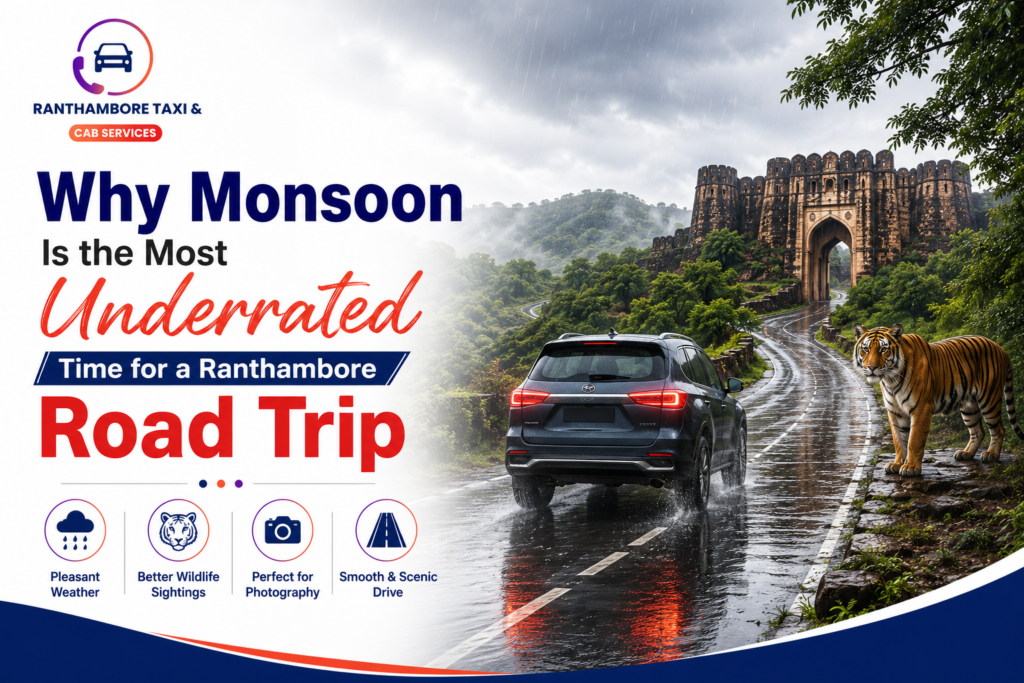
Most travellers plan their Ranthambore trip for winter, so the reserve gets packed between October and March. Because of that, monsoon quietly stays one of the best-kept secrets for a road trip here. Between July and September, the forest turns a completely different shade of green, the crowds thin out, and the whole experience feels far more personal. If you’ve been putting off Ranthambore because you missed
What Actually Changes at Ranthambore in Monsoon
Ranthambore’s core zones, Gates 1 to 5, stay closed from 1 July to 30 September every year, since the park needs this window for the forest to recover and for wildlife to breed undisturbed. However, that doesn’t mean the reserve shuts down. Buffer zones 6 to 10 remain fully open through the season, and tiger sightings still happen here, especially around Zone 6, which has become increasingly popular with monsoon visitors. So while your safari route looks a little different, the experience itself doesn’t disappear.
Why a Monsoon Road Trip to Ranthambore Actually Works in Your Favour
- Fewer crowds, more room to breathe: Since most tourists skip monsoon entirely, you won’t be fighting for gypsy slots or standing in long queues at the fort. Even popular viewpoints feel noticeably calmer.
- The landscape looks nothing like the postcards: The dry, dusty terrain most people picture turns lush and green almost overnight. Streams start flowing again, waterholes fill up, and the whole reserve looks more alive than it does the rest of the year.
- Better rates on stays and safaris: Because demand drops, hotels and safari operators often lower their prices during this window. Meanwhile, that gives you a genuinely comfortable trip without the peak-season price tag.
- Photography gets a serious upgrade: Moody skies, mist over the hills, and fresh greenery make for a completely different kind of photo than the dry-season shots everyone else has.
- The fort feels different too: Ranthambore Fort, perched above the reserve, looks striking against monsoon clouds a version of it most visitors never actually see.
Planning the Road Trip Itself
A monsoon road trip to Ranthambore needs a bit more planning than a winter one, mainly because of the rain. Roads can get slippery in patches, and visibility drops during heavier spells, so it helps to travel with a driver who already knows the route well rather than navigating it yourself. If you’re coming from Jaipur, our Jaipur to Ranthambore taxi service covers this exact stretch with drivers used to monsoon conditions. Coming from further out, our guide on the best time to visit Ranthambore breaks down how monsoon compares with the other seasons in more detail.
Tips for a Smooth Monsoon Trip to Ranthambore
- Book your buffer zone safari (Zones 6–10) in advance, since availability is tighter than it looks despite lower overall crowds.
- Carry a light raincoat or poncho rather than a large umbrella, which isn’t practical inside a safari gypsy.
- Pack quick-dry clothing and closed shoes, since the forest paths and fort steps get muddy.
- Build in some buffer time for your road journey, as rain can slow things down on certain stretches.
- Check safari zone updates close to your travel date, since the forest department occasionally adjusts closures based on rainfall.
Where This Fits Into a Bigger Rajasthan Trip
Monsoon also happens to be a good time to combine Ranthambore with nearby stops, since the whole region looks better once the rains set in. If you’re short on time, our 1-day Ranthambore itinerary still works well in this season, just with a buffer-zone safari swapped in. For a longer trip, our list of things to do in Ranthambore covers the non-safari spots like the fort and nearby temples that are especially worth visiting once the landscape turns green.
Final Thoughts
Winter gets Ranthambore its reputation, but monsoon is where you get the reserve almost to yourself. The forest looks different, the pace feels different, and you come away with a version of the trip most visitors never plan for. If the usual October-to-March window hasn’t worked out for you this year, monsoon isn’t a compromise it’s a genuinely different way to experience Ranthambore.
Planning a monsoon trip to Ranthambore? Get in touch with Ranthambore Taxi & Cab Services and we’ll set you up with a driver who knows the season’s roads and the buffer zones well.